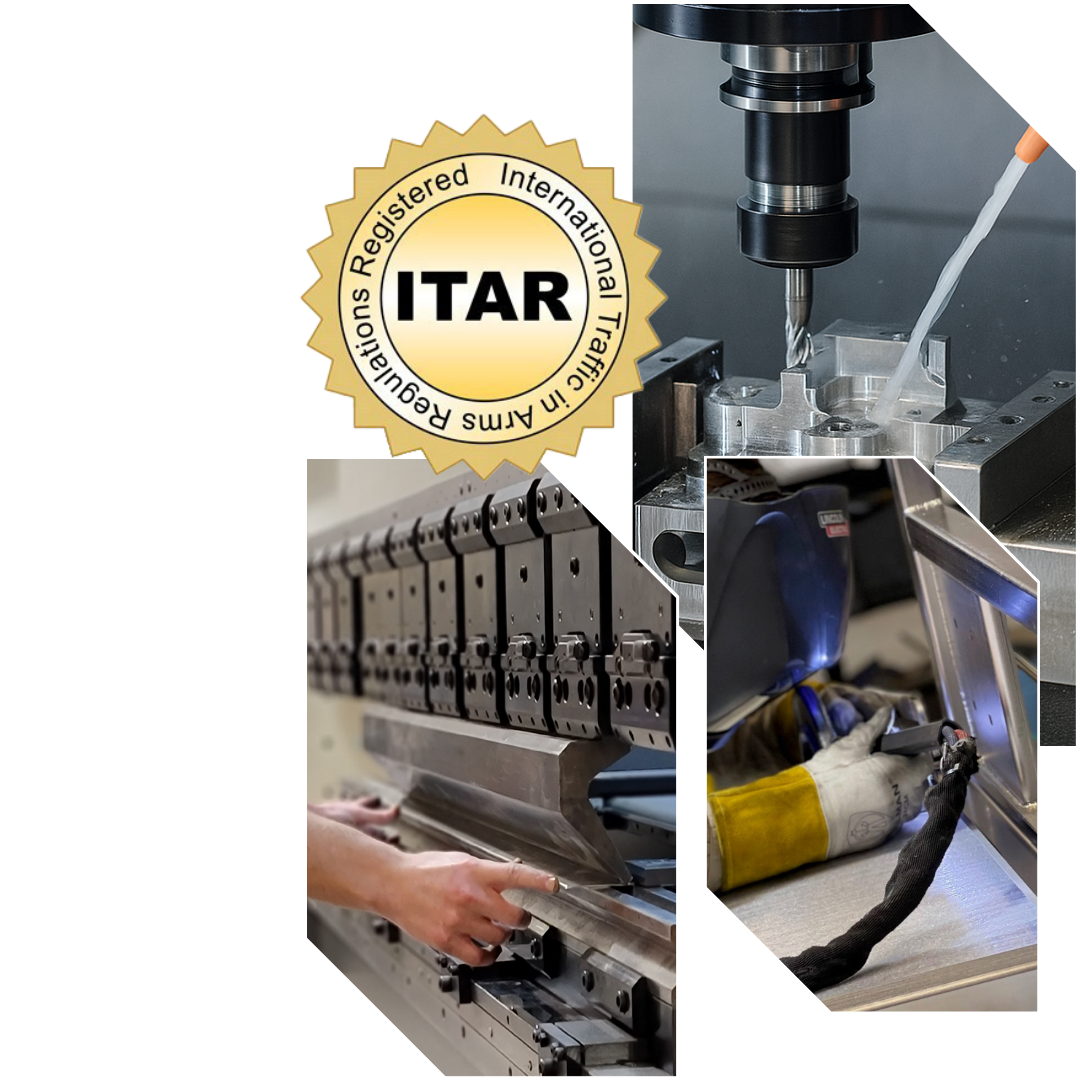
Trusted by Government, Defense, and R&D Teams Nationwide
Specialized Fabrication for Complex, Low-Volume, and Cleanroom Compatible Projects
Pro-Fab delivers build-to-print parts and assemblies for evolving designs. Supporting controlled environments, compliance-driven programs, and precision manufacturing from prototype through production.
Customer-supplied drawings manufactured exactly to specification. With revision control, documentation, and disciplined execution.
Cleanroom Equipment
Fabrication of carts, racks, workstations, and equipment designed for controlled environments and cleanliness-critical applications.
Machining, Welding & Assembly
In-house CNC machining, sheet metal fabrication, certified welding, and mechanical assembly — reducing vendor handoffs and program risk.
Finishing, Inspection & Compliance
Electropolishing, coating, inspection, and documentation to support regulated, compliance-driven programs.
When Precision Projects Hit a Wall
Drawings get stuck in review. Quotes take weeks. And the parts that matter most never make it off the spreadsheet.
That’s where Pro-Fab steps in. We specialize in low-volume, high-precision prototypes…especially when the specs aren’t complete, the timelines are tight, or the geometry is complex.
Our engineers work side-by-side with your team to turn uncertainty into progress. Delivering compliant, inspection-ready parts built for testing, validation, or launch.
Engineered for Precision. Built for Real-World Demands.
Pro-Fab combines advanced fabrication capability with defense-level quality systems. Giving engineers and procurement teams confidence from quote to delivery.
CNC Milling & Turning
Tight-tolerance components that fit and function exactly as designed.
TIG/MIG Welding & Assembly
Clean, durable joints that meet aerospace and defense standards.
Sheet Metal Fabrication & Forming
Flat patterns transformed into precise, weld-ready assemblies.
Finishing & Coatings
Anodize, chem-film, and powder-coat finishes that pass inspection and stand up to harsh environments.
Precision Inspection & CMM Verification
Every dimension verified, every report audit-ready.
Design for Manufacturability (DFM)
Early feedback that prevents rework, delays, and budget waste.
Rapid Prototyping & Pilot Runs
Validate your design before committing to production.
Documentation & Traceability
Complete certification and traceability packages for total compliance confidence.